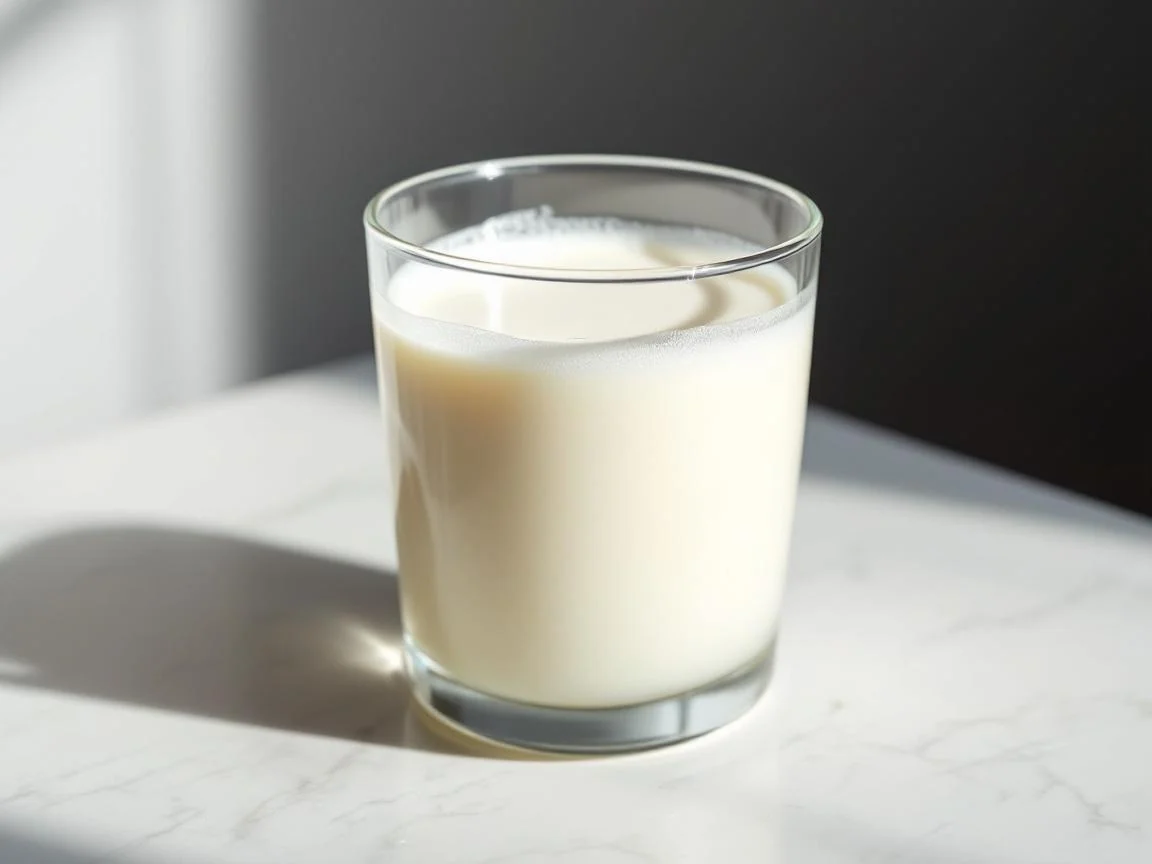
Liquid calories cause 50–200% errors (Almiron-Roig et al., Appetite 2013). Per 100 g: 61 kcal, 3.2 g protein, 3.3 g fat. A kitchen scale beats eyeballing — especially with milk.
How should I track Milk, whole, 3.25%?
The best way to track Milk, whole, 3.25% is by weight, not volume. A 200 g serving of yogurt or cheese varies in density between brands and fat levels, so the same portion can differ by 20–40 calories. Research shows people underestimate calorie-dense dairy portions by up to 50% when eyeballing (Almiron-Roig et al., Appetite 2013). A kitchen scale keeps things honest. Also check whether the label lists values for the product as sold or as prepared — some powdered or concentrated dairy products show very different numbers once mixed.