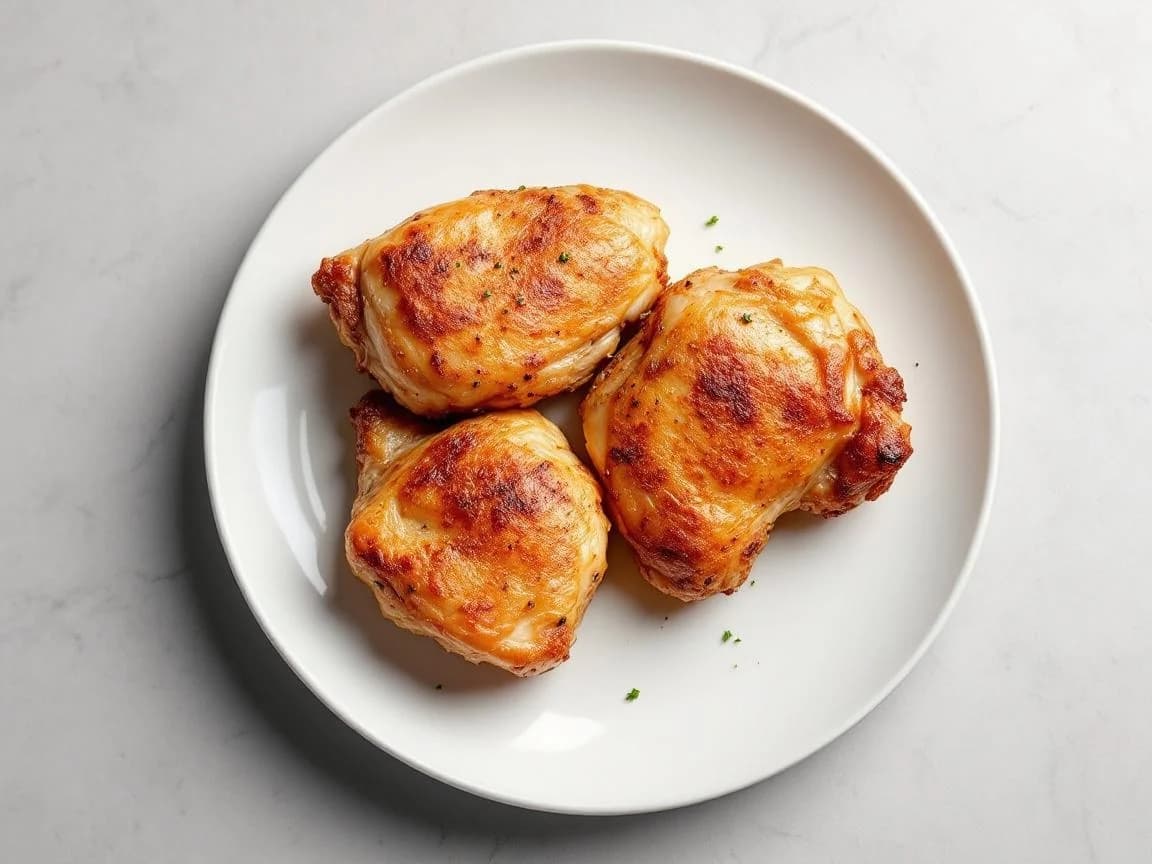
Duck is fattier than chicken — 11.4 g fat per 100 g. Cooking loss runs 25–35% as the fat renders (Sobral et al., Compr Rev Food Sci Food Saf 2021). Per 100 g: 217 kcal, 26.8 g protein. Skin-on duck carries most of the fat — removing it halves the count.
How should I track Duck Leg, White Pekin, Meat and Skin, Bone-In, Roasted?
Duck Leg, White Pekin, Meat and Skin, Bone-In, Roasted is high in protein. The simplest way to track Duck Leg, White Pekin, Meat and Skin, Bone-In, Roasted accurately is to weigh it raw, before cooking. According to USDA cooking yield data, meat loses 20–30% of its weight during cooking as moisture evaporates — so 150 g raw becomes roughly 105–120 g cooked. If you log the cooked weight using raw nutrition values, you will undercount your protein and calories. A kitchen scale takes the guesswork out of it. Quick tip: cook a batch, weigh it before and after, and you will know your personal shrink ratio for next time.