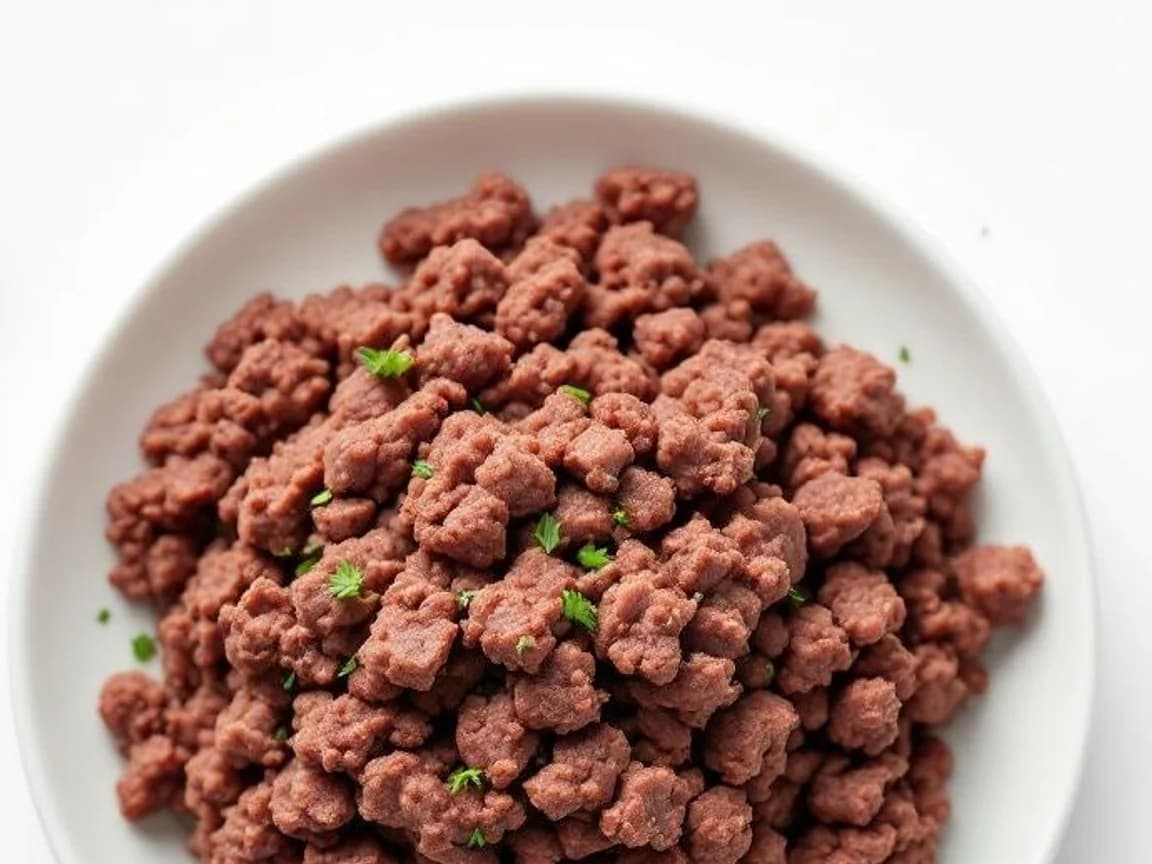
Bison is leaner than beef — 8.6 g fat, 25.4 g protein per 100 g. Protein synthesis plateaus at 1.6 g/kg/day (Morton et al., Br J Sports Med 2018). Bison cooks faster than beef due to lower fat — reduce heat to prevent drying.
How should I track Bison, ground, grass-fed, cooked?
Bison, ground, grass-fed, cooked is high in zinc. The simplest way to track Bison, ground, grass-fed, cooked accurately is to weigh it raw, before cooking. According to USDA cooking yield data, meat loses 20–30% of its weight during cooking as moisture evaporates — so 150 g raw becomes roughly 105–120 g cooked. If you log the cooked weight using raw nutrition values, you will undercount your protein and calories. A kitchen scale takes the guesswork out of it. Quick tip: cook a batch, weigh it before and after, and you will know your personal shrink ratio for next time.